Friday, March 29, 2013

Why EVERYBODY Should be Talking About Metabolic Syndrome

Stories about the obesity epidemic flood the news. Practically all of us can quote the statistics: a third of adult Americans are overweight or obese; future generations are looking even more dire. And, hand in hand with obesity, the increasing pervasiveness of Type II Diabetes, a completely lifestyle-induced disease, is becoming so ubiquitous that it seems like a non-event to see someone with a glucose meter at the lunch table.

These problems seem insurmountably huge and irreversible to most of us. According to analyses of various nutritional studies, 95% of standard diets fail to produce results. Diabetes is a disease that seems to be "someone else's problem" -- until the day the doctor tells you it's now yours. How do you hope to make progress against such a tide?

Graphic courtesy of Nature.com
The answer: understanding and addressing metabolic syndrome.

What? You don't know about metabolic syndrome? You've never heard of it? It affects an estimated 25% of Americans right now. That's okay. A year ago, I'd never heard of it either, and my father has had Type II Diabetes for the last 10 years.

What the heck is Metabolic Syndrome?


Put simply, metabolic syndrome is pre-diabetes. It's a set of conditions that set you up for that next step. The central condition is insulin resistance, which is the point where your muscles and other tissues can't effectively process and take up sugars from the blood anymore because insulin levels have been elevated chronically for an extended period of time.

A few quick words on insulin. It's a hormone, produced by the pancreas. Like cholesterol, it has been defamed because it is frequently mentioned in association with conditions like diabetes and Alzheimer's syndrome. But insulin isn't a bad thing at all. Like cholesterol, It has an extremely important job, to regulate energy by distributing glucose from your bloodstream to your brain, muscles, and organs. You want insulin doing its job, and doing it well. Hence, being insulin resistant is a problem for your body. It is a lifestyle-induced hormonal imbalance.

I want to break down the vicious cycle of events:

  • Any time you eat, insulin is released to handle the carbohydrate energy. But - your blood sugar is particularly spiked from high glycemic index foods (sugars, refined flour in cereals and bread, rice, potatoes, etc)

  • The liver calls for insulin to distribute the sugar from your bloodstream

  • Your muscles can't take up the sugar they need. The sugar/insulin combo sort of "bounces off" the cell walls.

  • Blood sugar remains high, so more insulin is sent out

  • Cells become more resistant to the already elevated levels of insulin, requiring more each time to overcome the barrier

  • Insulin is the body's primary signal for fat storage

  • So, while your muscles and other tissues are literally starving for energy that can't get through, your body is happily depositing all of that in fat cells instead


Throughout this cycle, your energy levels are on a roller coaster, but you can't seem to get on top of the tasks you need to accomplish. Internally, your pancreas and liver are working on overload to continually respond to the ever-increasing task of producing insulin and regulating blood sugar.

Do this long enough and - yep - you've got Type II Diabetes.

People who consume the Standard American Diet (which most do, that's why it's called standard) normally have cereal products for breakfast, sandwich items for lunch with a side of fries or chips, and pasta, potatoes, and breaded foods are dinner time staples. And that's not including the snacks, sodas, and sweets. Simple refined carbohydrates are built into virtually every bite we take. These foods spike insulin severely, over time leading to the cycle above.

I want to say it again: 25% of Americans have metabolic syndrome. Those same Americans are also struggling with weight. This is everybody's problem.

The good news about metabolic syndrome


There is actually quite a silver lining to this dire picture. First, understanding the preconditions that lead to diabetes and which are so closely linked with the weight epidemic sheds some very interesting light on both (I'll go into detail on that in a moment). Second, unlike full-blown Type II Diabetes, metabolic syndrome has been shown to be entirely reversible.

Two approaches that are regularly used successfully to reverse the insulin resistance syndrome: strength training (getting those muscles to deplete and consume all those sugars), and removing refined carbohydrates (those with the highest glycemic index/load) as much as possible from your diet. This two-pronged approach works from both ends of the cycle to restore the hormonal balance your body needs to effectively regulate insulin, fat, and weight.

Now let's take a moment to examine what metabolic syndrome reveals about obesity. Insulin is the primary signal for fat storage in the body. Fat metabolism, under normal conditions, is in a constant state of storage and release, providing your body the steady stream of slow, efficient energy it needs throughout the day. When insulin is continually released to address the blood sugar spikes from our sugary and starchy diet, the fat storage signal is increased. When we are insulin resistant and blood sugar levels remain high, the insulin redoubles its efforts. The signals increase still more and there is plenty of blood glucose that needs to be stored.

Did you know that diabetics often report a ravenous, insatiable hunger? Think about it. The cells themselves are starving in a sea of energy just out of reach.

The flip side of this metabolic cycle is when, through activity or stress, you need to consume energy at an increased rate for a time. Adrenaline, sex hormones, and growth hormone are the primary signals to call for additional energy. But this call only goes out from the liver when your blood sugar has reached a low threshold. If you're continually supplying your body with that "cheap energy", the liver will delay the need to call for that all-important fat energy to fuel the body.

Let's recap


Even though there is heated debate on the most effective methods and means for weight loss in the medical community, strangely, the processes described above are accepted as gospel. The line of thinking is hard to miss, though. Most Americans eat a certain way. Those eating habits irrefutably result in a strain on the pancreas and liver to handle all the sugar. The body has a limited tolerance for this kind of abuse. Insulin signals fat storage. Metabolic syndrome is insulin regulation run amok. 25% of Americans have metabolic syndrome and almost all of them are overweight or obese.

It's reversible. We know how to treat it. Nutrition and rigorous exercise (particularly strength training) are the key. Strength training also releases adrenaline, sex hormones, and growth hormone, the fat releasing signals. So why aren't we talking about it and what are we waiting for?

Spread the word. Learn about how different nutrients affect and fuel your body. Make your health an immediate priority. Have a glucose test to check for insulin resistance. And get into a strength program. And join us here often for more information and to share your success with us and others.

Monday, March 25, 2013

Mastering Macronutrients (Part 3) - Protein

In our first two posts of the "Mastering your Macronutrients" series, we covered carbohydrates and fats as part of your nutrition plan. Part three addresses the "mother of all macros": protein.

Before going on, I want to recap why we felt it was so important to put together this series. Dieters, whether they are successful in losing weight or not, by definition give over control to someone else to "fix" their problem. Whether you are purchasing a meal plan, using shakes, or simply following a plan someone else laid out for you, at some point a person decides "I can't do this on my own and I need someone else to tell me what to do." If you were successful, great. But what happens when you come off the diet? Or, what if your goals change? If you weren't successful, do you know why you weren't? Or are you just frustrated?

We want to give you the tools and understanding to build your own nutrition plan. To sustain it for months and years to come. And, to make adjustments to it, whether it is fine tuning or an outright overhaul. When you own the knowledge, you will be more likely to make the very best use of it. You simply can't buy that kind of personal authority.

Onward...

Protein, an introduction

Proteins, as a food component, provide amino acids which are required to renew and replace body tissue, including muscle, organ, and skin. There are over 20 amino acids used by the human body, nine of which must be consumed in the diet, as the body cannot synthesize them from other compounds. The body breaks down and distributes amino acids throughout the body through the digestive tract and liver.

Your body is continually breaking down and renewing tissues at a cellular level. The cycle of daily regeneration of tissue is known as "protein turnover," which is, in itself an energy-consuming process. Lower rates of protein turnover are associated with aging. Protein turnover has been shown to increase through exercise and training, particularly strength training.

Insufficient levels of energy in the body from carbohydrate (glucose) and fats will result in the body consuming dietary protein or muscle tissue to supply its needs (a process known as ketosis). Excess protein can be stored by the body as fat, but it is not an efficient process, as 1/4 of the potential caloric energy is consumed in the conversion process. For the most part, your body would rather just get rid of the unused protein, rather than keep it around.

Why protein should be the centerpiece of your nutrition plan


Protein is unique among the macronutrients. First of all, protein has the unique ability to trigger the satiety response in your brain. This shouldn't be that surprising, as we have evolved for millions of years to be a large carnivore. There is literally nothing as satisfying. I'm talking about the difference between feeling "full" which is the result of overeating and physical discomfort, and feeling "satisfied" which is your brain's "thank you" for giving the body some much needed building material. Even food marketers are catching on and have added the "fills you up with protein" message to an ever-increasing number of their campaigns. This is not an endorsement for their products, however, as most will far overstate the virtues of their product while simultaneously glossing over nagging issues like sugar content. Still, it's a fact - protein-forward meals trigger the "I'm full and satisfied" response.

Protein is inefficient. What? How can that be a good thing? When it comes to something called the thermic effect of food (TEF), inefficiency is a great thing. That's because protein takes work to break down. Work, as in: calories. Protein has the same caloric content per gram as a carbohydrate food, but carbs are absorbed easily, while protein actually burns energy to digest and absorb. Therefore, consuming the same calories in protein instead of carbohydrate will actually create a little more of a calorie deficit for you overall.

With me so far? Here's where it gets interesting.

Calorie counters (i.e. calories in < calories out = weight loss) operate on the assumption that a calorie is a calorie. It's nothing but a piece of potential energy waiting to be expended or stored in the body. Even those that have gone to great pains to create sophisticated equations to account for basal metabolic rate (BMR) and TEF are missing something critical. Protein is the only macronutrient that can be used to build new muscle tissue, which does more work and burns more sugar when it does. So, rather than just being a piece of potential energy, it is a piece of potential ability to do work and consume more energy. It's like the cold fusion of nutrition!

Granted, you have to be working on getting stronger to create those adaptations, but that's why we recommend a combination of nutrition and training, including strength training to optimize your body composition.

Another point that is not well accounted for in the calorie counting mindset is that, biochemically, it is extremely difficult for protein to be converted into available energy, which means it's very hard to store as fat. So, no, a calorie isn't exactly a calorie.

How much protein do I need?

The precise amount of protein you need depends on a lot of things: the amount and type of training, your specific goals (weight loss, muscle gain), your age, as well as how you are managing your other macronutrients. That said, the current consumption level for Americans is somewhere around 15% of total intake.  This is lower than anybody should be consuming. A healthy nutrition plan should generally consist of anywhere from 30-40% of intake from protein, depending on your activity.

If you're at a stable weight and not accelerating protein turnover with heavy exercise, then somewhere between 0.6 and 0.8 grams per pound is fine. If you are working out hard and trying to lose fat while preserving muscle mass, then between 0.8 and 1.2 grams per pound of your target weight should be your daily goal. If you are trying to gain muscle, then between 1.2 and 1.5 grams of protein per pound of your desired body weight is a better target.

Choosing quality protein sources

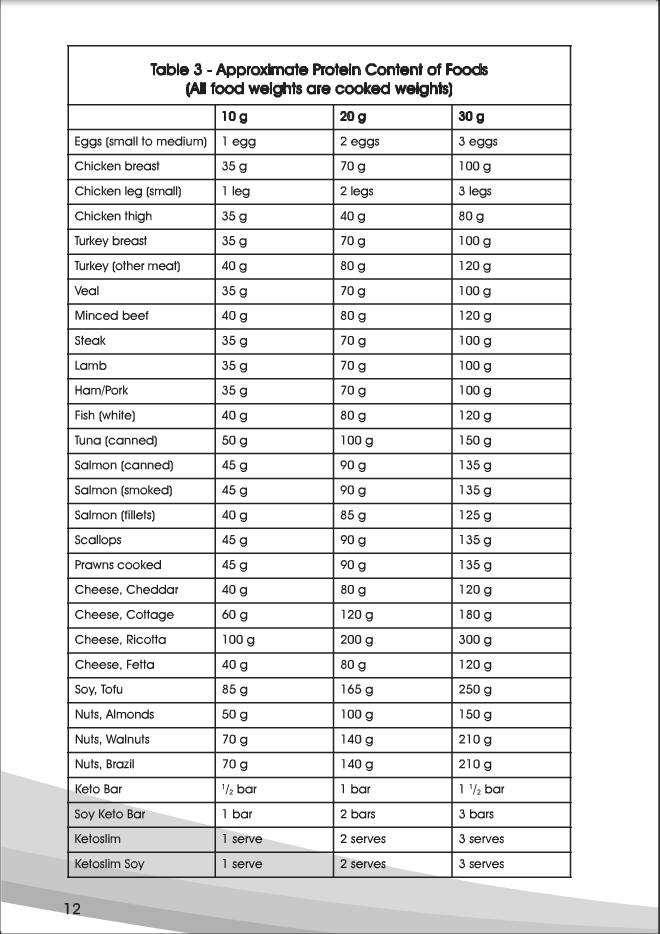
Protein content of common foods.

There are three major considerations when choosing the protein elements of your nutrition plan. First, of course, is the actual protein content of a particular food item. The heavy hitters are pretty intuitive, but some may surprise you.


Second, most protein sources are also sources of fats and, to some degree, carbohydrates. This, in itself is a great reason to choose your protein meal element first when building a macronutrient-friendly plate. Then you can select and manage additional elements with the fats and carbohydrate from your protein source added in.

The third is "bioavailability." Simply put, your body will be able to more effectively absorb some protein sources than others. Below is a table of the bioavailability index of some common foods.

Bioavailability of certain protein sources.

Putting it all together

Using the information in this series, you're in a position to build and customize a powerful nutrition plan. Let's flesh it out with a few additional points.  This could almost be a separate post, but I think it fits well into the big picture.

Calories or Macros? Everybody approaches problem-solving differently. Some need precise counts, while for others, directional "big picture" indicators suit their needs. We met and exceeded our weight and body fat goals without counting a single calorie. If counting calories helps you, then do it. But: DO NOT rely on anybody else's formula for calculating how much you need or how much you burned. Track the calories you consume and track it against your progress. If you're making progress, then you don't need to reduce. If you aren't, you STILL might not. Are your macronutrients in an appropriate proportion? You can substitute protein for carbohydrate calories and you may see progress without reducing. You can substitute protein for some fat and instantly reduce calories without reducing total portion consumption. The point is, you are the only baseline that matters.

Optimize Your Systems: Increase protein turnover and insulin sensitivity through a training program that focuses on building strength. The adaptations you create will not only make you stronger and burn calories, but your body will also become more effective at digesting and processing the nutrients you consume. On a related note, ditch the scale (or at least put it in time-out), because it is a one-dimensional measure that doesn't tell the whole story of everything you are doing to improve your body. How do you feel? How do your clothes fit? If you're going to weigh yourself, include a body fat measurement as well so you can see the change in your body composition.

Eat Fresh, Whole Food: Cooking using fresh ingredients removes countless issues from managing your nutrition. You don't have to decode labels and seek out hidden traps like sugars, highly refined carbohydrates and others, such as added gluten. You are in control of every single ingredient in your nutrition plan. This will also free you from flavor profiles that have been designed by their manufacturers to be addictive, rather than satisfying. Honestly - you'll be amazed how much more you enjoy your meals.

Think of food as fuel and building blocks I'm not saying don't enjoy your food. We LOVE to eat and really enjoy meal times. But we also make sure that we have quality ingredients that meet our nutrition needs from the start. That way, as you combine and prepare your menu, all the pieces are already there for you to make as delicious as you like.

Take Control: Don't let anybody else dictate to you how to manage your nutrition or achieve your goals (even us). That's because everybody is different and every body is different. You are starting with a completely unique set of factors, behaviors, and goals. Using these tools WILL work. But exactly how you put them to work is completely in your hands.


Tuesday, March 12, 2013

Mastering Macronutrients (Part 2) Fats

In part 1 of Mastering Your Macronutrients, we demystified and provided practical guidance to the carbohydrate element of a solid nutrition plan. In part 2, we delve into dietary fats. Let's start by making a clear distinction: the fat you consume is not interchangeable with the fat cells in your body. Much of fat's reputation comes from this obvious, but incorrect, assumption.

Your body has a relatively fixed number of fat cells. They don't come and go when you gain or lose weight (unless the person is morbidly obese, in which case the person has literally filled their fat cells to capacity and must create more to handle the load). Rather, they empty out or fill up, like water balloons. The biochemical processes that store excess sugar as fat in the body are a means of balancing your blood sugar levels, not taking fat molecules one-for-one and sticking them to our belly, butt, or thighs.

Eating fat does not make you fat. If you question that, then consider this: in the last forty years, American fat consumption has dropped dramatically with hundreds of low-fat alternatives to whole milk, butter, cheeses, and dressings, not to mention the shift in meat consumption toward much leaner varieties. Yet, as a nation, we get heavier and sicker.

Fats, an introduction


Fats come from animal and vegetable sources. The human body can produce most of the specific varieties of fats it needs from a healthy nutrition plan, except for two. These Essential Fatty Acids come in the form of a type of Omega 3 (ALA) and a type of Omega 6 (LA). Human beings must consume these fatty acids in their diet.

The human body needs fat to function effectively. Fats in the blood are required to absorb and utilize proteins and certain vitamins. Fats are an essential component of joint health. Fatty acids are required to promote and support synaptic activity in the brain. And fats are essential to cell health. We don't think about our cells much. But damaged cells are a problem. Beauty commercials talk about free radicals, but what are they? Free radicals are damaged cells on a mission. Our cells have a natural "self destruct" code that causes them to die off and then be replaced by new, healthy cells. Free radicals are cells that refuse to die. What's more, they seek out other cells and damage and mutate those as well. Cancer occurs when damaged cells multiply and spread. So, without putting too fine a biochemical point on it, free radicals are "baby cancer" which may or not grow up into something nasty. Suffice to say - we need fats in our diet.

Cholesterol:
Cholesterol is an incredibly complex subject and there is still a good deal of controversy in the medical and nutritional communities about risks, benefits, and management mechanisms. But sometimes a simplified version is what you need for a foundation to build on.

Cholesterol is the natural mechanism for all mammals to transport fats (lipoproteins) through the body to repair and support cells of all types. You can't get rid of it and you wouldn't want to. Unfortunately, in an effort to warn people about the risks of heart disease, the medical community and, along with it, many government agencies have managed to demonize an essential function without creating a lot of clarity. Clarity is good, don't you think?

Most people understand the difference between arteries and veins. Arteries circulate oxygen throughout the body while veins return the oxygen-depleted blood back to the lungs to get more. When we work hard, our muscles need more oxygen. Our heart beats faster, our lungs pump harder, and the rate of circulation increases. This is all to maintain a constant level of balance of oxygen at the cellular level.

Apply that thinking to cholesterol. In general terms, Low Density Lipoprotein (LDL) is associated with distributing essential fats to our cells. High Density Lipoprotein (HDL) is associated with clearing unneeded fats from the blood. Instead of the heart, this system is controlled by the liver. Just like oxygen, the body strives to maintain a certain balance of cholesterol in the blood. If there is plenty present, the liver decides not to produce more. And, just like oxygen, if you decided to take it upon yourself to breathe heavily and quickly for no particularly good reason, you'd overload yourself and get dizzy, with no benefit, because your cells didn't need the extra boost. With cholesterol, you can "breathe heavily" by over-ingesting fats and dietary cholesterol that spills directly into the bloodstream through the digestive process. The liver isn't making any, but you're still shoving it into your system. And, because you've overridden the body's natural regulation system, you're pumping a lot of LDL in without a corresponding increase in HDL.

I want to say it again: I'm oversimplifying an immensely complex process, but in principle it stands.

At this point, we have to come back to carbohydrates. As I said earlier, the organ that regulates cholesterol production ("good" and "bad") is the liver. Constant overconsumption of refined carbohydrates in the form of refined flour, rice, and sugars overloads the liver. This overload (it's not clear precisely how) inhibits the production of HDL - the "clearing out" cholesterol. As a result, you have more in than out. Anybody that's had a backed up sink can identify with this principle.

Restricting your refined carbohydrate intake will improve your liver function and reduce your insulin resistance, which will improve your ratio of HDL to LDL, which, in turn, is a major factor in reducing your risk of heart attack or stroke.

"Good" fats and "Bad" fats


The pop fitness world has sold us a dizzying array of "good" and "bad" fat messages over the years. As I said in Part 1, "good" and "bad" as universal labels aren't helpful. But, like gas station sushi (thank you esurance commercials), some choices are clearly better than others.

The first thing that makes classifying foods by their "good" or "bad" fat content is that most foods have a combination of fat types.  For example, lard, about as "uncool" a fat selection by today's standards as you could find, is about equal parts saturated and monounsaturated fats, with 10 percent polyunsaturated as well. Nature, it seems, likes to keep some of her mystery. In the graphic below, examples are given based on the primary source of fat provided by the food.


The Fat Pyramid. More from the bottom, less from the top.

So, how many fat calories do I need?


Fats are more than twice as dense, calorically, as carbohydrates and protein (9 cal/gram as opposed to 4). Depending on your specific health conditions, activity level, and personal goals, you may choose a different threshold, but a good rule of thumb is to keep your fat intake somewhere around 30% of your total calories. As a simple guideline that would mean keeping your portions of fats to 1/2 the size of carb or protein, by weight, as a portion of your total intake.

If you are taking dietary supplements for essential Omega 3 (ALA) and Omega 6 (LA), and are looking for a way to reduce your total calorie intake somewhere, you could trade some fat grams for protein, taking it down to as low as 20% for a while, but for most, there's no need to do this as part of a long-term nutrition plan.

Since fats are most often a component of food that also includes protein, you aren't going to have to look very hard to find ways to supplement with additional fat sources. If you're eating whole meats, eggs, and dairy products, you're probably doing just fine for fat intake. And don't forget your cooking techniques. We use a couple tablespoons of extra virgin olive oil in virtually all of our stovetop cooking, some of which makes its way onto your plate.

A few words about fat myths and misconceptions


"Low-fat foods = healthy:" As a cooking component, fat provides taste and texture to food. It is also essential as an emulsifier, binding particles together in the cooking process. When you take fat out, you have to replace it with other components that will substitute for these functions. Enter sugar, gluten, and a host of other things that are difficult to pronounce. Low fat foods will likely have more total calories (and empty ones at that), be less satisfying in texture and bite, and may well aggravate the systems of those who are gluten sensitive. Have you ever looked at a 5lb bag of sugar boasting the label "Naturally Fat Free"? Not exactly a believable health claim.

"Eggs yolks are bad for you:" This particular tidbit arose out of the storm against cholesterol. Unfortunately, it was based on lowering total cholesterol, rather than maintaining a healthy ratio of HDL to LDL. As long as you are mindful of your total intake of fats and cholesterol within your 30% (or whatever you choose), eat eggs. They're delicious and a great source of protein.

"Frying food is bad for you:" So many people jump to blame the "grease" in pan or deep frying food, while completely ignoring the food that got fried. The majority of popular fried foods are either low grades of meat or high carb items like potatoes, breaded in white flour. Oil conducts heat very effectively to allow food to cook extremely quickly, resulting in a nice sear and more tenderness than methods which take longer. At sufficient heat levels, very little of the oil is absorbed into whole foods like vegetables or whole cuts of meat. Look to the quality of the dish as a whole. There are a lot worse things than "grease". Just select the right oil for the job from the pyramid above. Another great resource is a detailed review of oils on Mark's Daily Apple.

"Fat will make you fat:" I know I started out with this, but it's really worth repeating. You need fat. Stored body fat is principally composed of excess carbohydrates (sugar) in the diet.

So, to recap: fear not the fat!  It is an essential part of your nutrition plan.  And, when managed effectively, makes for tasty choices and increased variety in your menu.  In our final installment of the series, we will cover the "mother of all macros" (my term of endearment), protein.  Until then!